
Service
Private AI knowledge assistant
A private assistant that answers questions from your own data and documents, shows where each answer came from, and runs on hardware you control. It reads only the documents you choose and answers everyday questions in seconds instead of hours.
What you get
Answers from your own documents
- An assistant your staff can ask in plain language, on a desktop or a phone.
- Answers that link to the document and page they came from, so anyone can check them.
- Your manuals, policies, contracts and records loaded, organized and kept current.
- Access set up to follow your existing permissions, and tested with your own user accounts before launch.
- A server on your own network, or a private host you choose. Your documents are not used to train anyone else’s model. Why that matters for your intellectual property.
- Training for your team and a written guide to keeping it up to date.
Who it is for
- Teams that answer the same questions every day.
- Firms whose procedures, policies or contracts are spread across binders, shared folders and inboxes.
- Businesses that cannot send client documents to a public AI service.
How an engagement runs
We start with a defined set of documents and test the assistant against real questions from your staff before it goes wider. Size and timeline are set in the free consultation.
Hardware cost
As a ballpark, one machine able to run a private assistant for a small team, a few people at a time, costs from about $3,450 for a mini PC to $8,500 or more for a top graphics-card build, at October 2026 prices, bought once and owned by you. Larger teams need a bigger machine or a second one; we size it with you in the consultation. Workstation or subscription? Read the comparison.
An honest limit: any AI assistant can be wrong. That is why the assistant shows its source with each answer, and why we measure it against your own test questions before launch.
Testing
How we test the assistant
Before launch, we build a test set with your staff: real questions, each with the right answer and the document it should come from. We run the assistant against it, and a person checks every result.
Correct answers
How many test questions it answers correctly, checked against the expected answer.
Correct sources
Whether the document and page it cites actually support the answer it gave.
Saying “not in your documents”
Questions whose answer is not in your documents. The right response is to say so, not to guess.
Permissions
The same questions asked from different staff accounts, to confirm each person only gets answers from documents they may open.
A sample report line (illustrative, not a client result): “Test set of 120 questions: 109 answered correctly, 4 wrong, 7 correctly declined. 111 of 113 answers cited a page that supports them. 0 permission leaks across 3 test accounts. Each wrong answer is listed with its cause and the fix.”
You keep the test set and the results. Run it again after every document update or software change, and you can see whether the assistant got better or worse.
Story · Hospitality
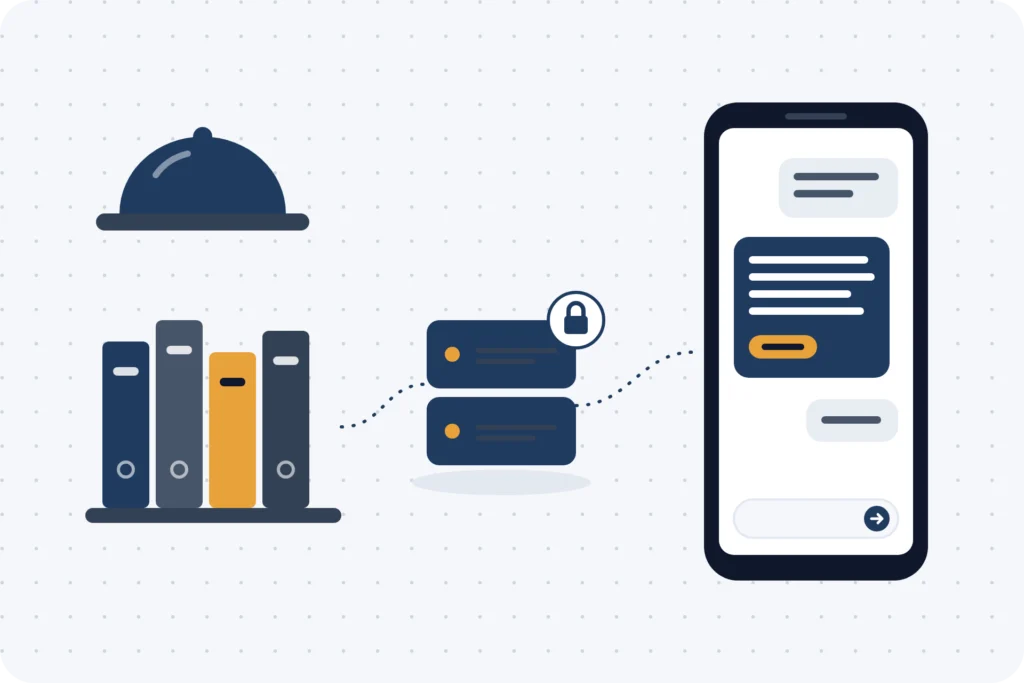
A hospitality group lets staff ask the binder
Illustrative scenario: a composite of common situations, not a client testimonial.
Read the hospitality story
The situation. A regional hospitality group with several locations kept its procedures, menus and vendor contracts in binders and shared folders. New staff could not find answers quickly, and managers fielded the same questions every shift.
What we did. We set up a private knowledge assistant on a small server on the company’s own network, loaded with its documents. Staff ask questions in plain language on a phone and get an answer that links to the page it came from.
The result. Answers in seconds instead of a call to a manager, with the source shown so staff can check it. The documents stay on the company’s own network.
Service: Private AI knowledge assistant
How we work
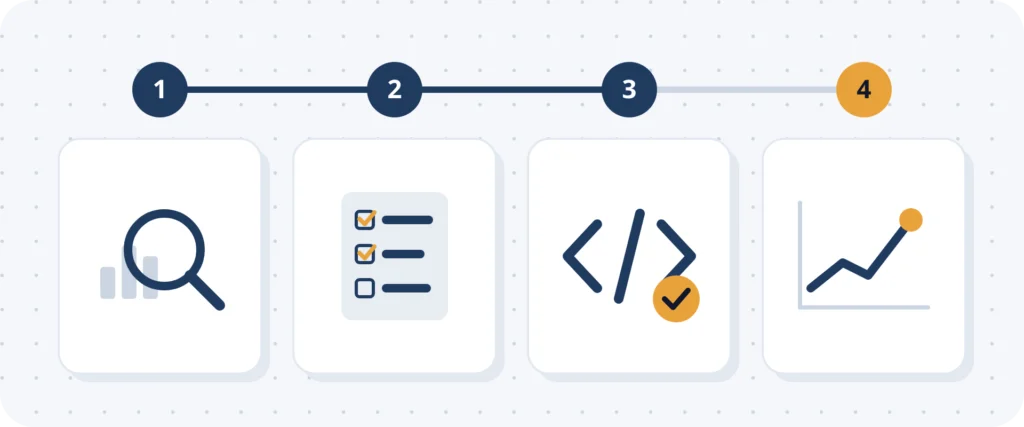
Four steps, no surprises
01
Free consultation
30 minutes, no cost. You describe the problem; we give you an honest view of its size, its risks and whether we are the right fit. You are in control at all times.
02
Scope and estimate
A written scope with deliverables, timeline and price. Work under 30 days is billed hourly; longer projects can be hourly or a fixed bid.
03
Build and verify
We recommend short cycles so you can measure progress quickly. Every function we write is tested, and AI-assisted work is reviewed by a person before it reaches you.
04
Hand over
Documentation, training for your team, and full ownership of the code and data. Ongoing support if you want it, never required.
Find out what your project really takes.
Book a free 30-minute consultation. You will leave with a realistic sense of size, cost and risk, whether or not we work together.